
Transform a collection of schools into a cohesive school system.
Most districts run on programs, practices, and relationships built up one at a time over decades. The result is a collection of schools and departments that each work in their own way, so the support a student or teacher gets depends on which building they are in. We help district leaders see how the whole system operates, then redesign it to work as one aligned organization.

WATCH THE OVERVIEW
See how it works in under three minutes.
THE PROBLEM
When schools and departments each work their own way, student support is inconsistent, costs rise, and outcomes vary.
4+
elementary literacy curricula in use in more than half of districts.
We can no longer rely on the extraordinary efforts of the superhero educator. The problems districts face today are bigger than any individual. The question for district leaders is how to design their school system and foster a culture that harnesses the collective capability of their staff.
THEORY OF ACTION
District leaders influence outcomes through the organization they build.
Superintendent quality explains about a quarter of the variation in student learning growth across districts, even though superintendents cannot be in every classroom each day. District leaders influence outcomes by building strong organizations and creating the conditions for their teams to succeed.
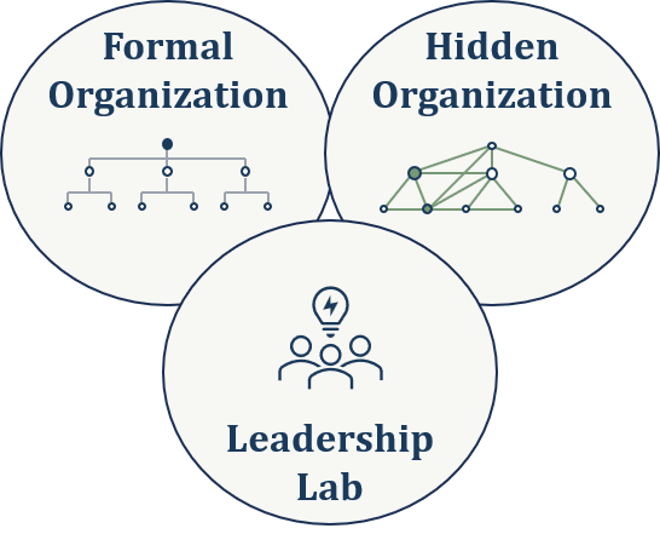
Organizational Intelligence gives you the visibility to put every team member in a position to have the greatest impact on their students and colleagues.
Formal Organization: Design the system
Structure, staffing, and systems aligned with your priorities and budget. Learn more
Hidden Organization: Foster the culture
The relationships that shape how priorities play out in each building. A 15-minute staff survey maps the people who influence perceptions and practice. See what is included in a hidden organization map
Leadership Lab: Align your cabinet
A full-day working session where your cabinet turns the findings into an actionable roadmap. Learn more
Source: Stemper, Essays on the Economics of Education, Harvard University doctoral dissertation, 2023.
HOW WE HELP
Designing systems and building capacity during moments that matter.
Superintendent Transition Strategy & Support
An evidence-based transition plan and ongoing personalized coaching to make early decisions with confidence.
Strategic Planning & Delivery
A unified, actionable plan informed by stakeholder engagement, rigorous analysis, and the relationships that translate vision into practice.
Organization & System Design
Staffing and structure decisions that further your priorities and build trust with your board, staff, and community.
For curriculum partners
Assess and strengthen the systems, structures, and culture that help educators thrive during an HQIM adoption.
Learn more →
RESEARCH
State of District Organization Design 2027
An ambitious multi-state study of how school districts are staffed and structured, covering districts that serve at least one in four US public school students. See how districts across the country allocate staff between central office and school sites, departments, job levels, and more.
FREE TOOLS
Start with a look at your own system.
Capacity Self-Assessment →
Rate your district against our research-driven Capacity Model in 10 minutes.
Hidden Organization Map →
See how a 15-minute staff survey becomes a map of who educators rely on for advice.
Start with a conversation.
Thirty minutes, off the record.